Etiquetas

lunes, 26 de octubre de 2020

A1 LESSON 7: WHERE IS THERE A SUPERMARKET?


DESCRIBIR TU ENTORNO FÍSICO.

¿Cómo describir el mundo que nos rodea. MY WORLD?

En esta lección vamos a estudiar cómo referirnos a las cosas que nos rodean. Por ejemplo cómo es tu barrio, la ciudad, que negocios hay, etc.

Comenzamos:

El verbo THERE IS/ THERE ARE.

Usamos THERE IS para describir existencia SINGULAR de las cosas y THERE ARE para describir la existencia PLURAL de las cosas.

USE A DICTIONARY TO TRANSLATE THE FOLLOWING SENTENCES

  1. There is a store round the corner.

  2. There are two houses near the station.

  3. There are three schools in this town.

  4. There is a square in the city center.

  5. There are many people at the restaurant.

DESCRIPTION OF THE ENVIRONMENT- descripción de nuestro entorno


Para describir nuestro ambiente y la posición y lugares de las cosas debemos aprender algunas palabras especiales llamadas “preposiciones”, que indican DÓNDE se encuentran.

OBSERVA Y TRADUCE LAS PREPOSICIONES


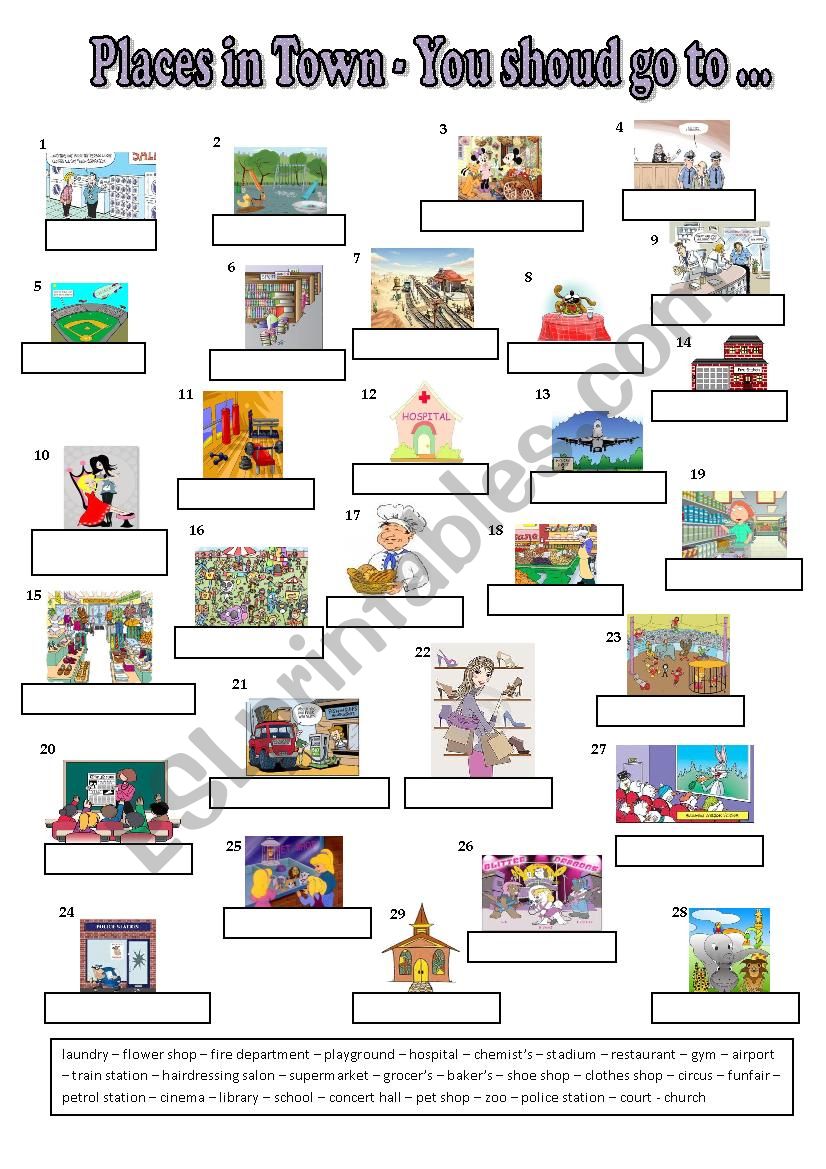
PLACES IN TOWN- Los lugares de la ciudad.


BUSCA EL SIGNIFICADO DE TODOS LOS NEGOCIOS.

Example: Bakery: panadería

               Cleaners 


DESCRIPTION OF THE CITY

USE THERE IS/ THERE ARE y la preposición que corresponda para describir este plano de la ciudad.

Example: There is a restaurant between the hotel and the train station.

………………………………………………………………………………………………………………………………………………………………………………………………………………………………………………………………………………………………………………………………………………………………………

………………………………………………………………………………………………………………………………………………………………………………………………………………………………………………

…………

ESTE ES UN MAPA DE LA CIUDAD DE MENDOZA

OBSERVA EL MAPA  Y. DESCRIBE LA CIUDAD DE MENDOZA A UN TURISTA.


……………………………………………………………………………………………………………

ANSWER THESE QUESTIONS

  1. Where is there a Banco Nación?

  2. Where is the nearest Mc Donald´s?

  3. Where is there an ATM?

  4. Where are there clothes´ stores?

  5. Where is there a Carrefour supermarket?


WATCH THIS VIDEO


NOW DRAW AND DESCRIBE YOUR PLACE OF WORK OR STUDY. BE READY TO TALK ABOUT IT IN OUR VIDEOCALLS.

LECTURA COMPRENSIVA


READ THE FOLLOWING PASSAGES. THEN COMPLETE THE CHART BELOW


My name is Caroline. I´m from Canterbury. I am the owner of an important company. I have got 2 cars and I live in a beautiful house.

My house is very big. There are four bedrooms and a large living room. The garden is very big, too. There are many plants and I use a lot of pesticides. My garden has got a lot of lights. It looks very beautiful at night!

My house has got a large swimming pool. It has got about 10.000 litres of water. I change it every week.

I am a city person. I am not a country woman.


Hi, I´m Jonathan! I am the manager of an expensive hotel in New Jersey.

This is my house in the country. It is very big and comfortable. It has got three bedrooms. There is a large front garden.

The house hasn´t got many lights. During the day they are always off.

At night I turn on the lights of the room where I am.

I haven´t got a car. I use my bicycle to go to work. It is fun. 

I don´t like the noise of the city. I prefer my house in a quiet and clean place.


COMPARA AMBOS TEXTOS Y LUEGO COMPLETA EL CUADRO


Caroline

Jonathan

Occupation


number of houses


number of cars


use of energy


use of water


  1. In your opinion, who is a GREEN PERSON? Caroline or Jonathan? WHY?

…………………………………………………………………………………………………………

………………………………………………………………………………………………………....

2- ARE YOU GREEN?

.................................................................................................................................................

..................................................................................................................................................

Dar y entender indicaciones correctas de cómo llegar a un lugar es muy importante para no perderte. Estas son algunas formas simples de indicar lugares en la cuidad.

Observa el vocabulario. Ayúdate con un diccionario.


Mira el mapa nuevamente y responde las siguientes preguntas:
You are at the corner of San Martin and Sarmiento St.


Lee el dialogo modelo y responde:

- Excuse me, Where is the Banco Nación?
- Go straight for 3 blocks. At Necochea St.turn left. The bank is on your right. You cannot miss it!

1- Where is there a Mc. Donald´s?
2- Where is the Independencia Square?
3- Where´s the nearest cafe?

AHORA PRACTICA DAR INDICACIONES Y NOS VEMOS EN LA PLATAFORMA.


-------------------------END OF LESSON 7----------------


miércoles, 7 de octubre de 2020

A1 LESSON 6: MEET MY FAMILY- CONOCE A MI FAMILIA


HABLAR DE LA FAMILIA. PERSONALIDAD  Y PROFESIONES

Mira y completa el árbol familiar.


Aprendemos el vocabulario de la familia. Realiza un glosario.
  1. Prepara tu propio árbol familiar. 
¿Cómo describimos la personalidad en inglés? Mira este video y toma las palabras que necesites.

CHARACTERS AND PERSONALITY. te adjunto un documento para ayudarte con esto. NO NECESITAS ESTUDIAR TODAS LAS PALABRAS. 


2- Luego vas a hablar en inglés diciendo nombre de tu familiar: name, age, occupation, and personality. 
EXAMPLE:
Nancy is my grandmother. She is 67 years old. She´s retired. She´s from Argentina. She is very kind and optimistic.
           

PROFESSIONS AND OCCUPATIONS

Te dejo un video con profesiones y oficios que pueden ser útiles para tu descripción.


¿Preparado para la charla online? 
Elige 4 personas de tu familia para hablar sobre ellas.
¡Te espero!

----------------------------------------------END OF LESSON 6--------------------------------------------------

martes, 6 de octubre de 2020

A1 LESSON 5 WHAT HAVE YOU GOT IN THAT CASE? QUÈ TIENES EN TU MALETA?

 HABLAR DE NUESTRAS PERTENENCIAS. LOS COLORES. OBJETOS ESCOLARES Y PERSONALES.

TE INVITO A VER EL SIGUIENTE VIDEO:


Podemos describir nuestras pertenencias usamos el verbo: 

The verb HAVE GOT

El verbo "TO HAVE" significa TENER.

SE FORMA ASÍ:

We use HAVE GOT with I-YOU- WE-THEY

We use HAS GOT- with HE-SHE and IT

ESTUDIA LA TABLA 

COMPLETE WITH HAVE GOT or HAS GOT.

  1. EXERCISES

1-    Jane  (have got) a daughter and a son.

2.  you  (have) a lot of friends?. No, I .

3. Can you tell me the time? I  (not have got) a watch.

4.  you  (have got) a computer at home? No, I .

5. Larry  (not have got)a mobile phone.

6. They are very busy at work. They  (not have got) time.

7.  Mark  (have got) a new girlfriend? Yes, he .

8.  they  (have got) a pet? Yes, they .

9.  Jane  (have got) a dictionary? No, she .

10.  your mother  (have got) blue eyes? Yes, she .


2-     TRADUCE LAS SIGUIENTES ORACIONES


  1. Yo tengo un nuevo trabajo.
  2. ¿Qué tienes en ese sobre?
  3. Tengo dos hijos.
  4. Ellos tienen muchos amigos en España.
  5. ¿Tienes un minuto?

         3- COMPLETE WITH HAVE GOT o HAS GOT

-       She……………………a new bike.

-       We ……………………three teachers.

-       They …………………….a laser pen.

-       You ………………………..my book.

-       He …………………a brother.

          4- FORMULA  PREGUNTAS Y RESPUESTAS

  1. HAS Tom got a computer? (x)

No, he hasn´t.

  1. You/ a bicycle                       …………………………………..
  2. She/ a new house   (x)        …………………………………….
  3. Mark/ a girlfriend                  …………………………………….
  4. They/ an English teacher (x) …………………………………..

NUESTRAS PERTENENCIAS
1- SCHOOL/OFFICE  OBJECTS= OBJETOS ESCOLARES Y DE OFICINA

OBSERVA EL SIGUIENTE VIDEO Y ESTUDIA EL VOCABULARIO


2- PERSONAL OBJECTS

Mira este video y aprende los OBJETOS PERSONALES.


Ahora en la video llamada vamos a aplicar el vocabulario aprendido sobre OBJETOS ESCOLARES y de OFICINA  Y PERSONALES.

¡TE ESPERO!

-----------------------END OF LESSON 5----------------------------


jueves, 24 de septiembre de 2020

A1 LESSON 4: DAMOS DATOS, APRENDEMOS NÙMEROS Y DELETREAMOS PALABRAS


CUANDO DAMOS INFORMACIÓN PERSONAL DE UN TERCERO, POR EJEMPLO UN HOMBRE, UNA MUJER HAY CIERTOS CAMBIOS QUE REALIZAR. 

                              OBSERVA EL SIGUIENTE EJEMPLO


What is HIS name? (cuál es SU nombre?) 

Where IS HE from? (de dónde ES?) 

What does HE do? (a qué SE dedica?)

What´s HIS telephone number? 

What´s HIS e-mail address? 

What is HER name? (cuál es SU nombre?) 

Where IS SHE from? (de dónde ES?) 

What does SHE do? (a qué SE dedica?) 

What´s HER telephone number? 

What´s HER e-mail address?

RECUERDA:

Usamos HIS para referirnos a un HOMBRE y HER para referirnos a una MUJER.

✋THE ALPHABET IN ENGLISH

2. TO SAY YOUR NAME AND SURNAME YOU NEED TO LEARN THE ALPHABET & THE NUMBERS Listen to your teacher

ORGANIZE THE LETTERS ACCORDING TO THE PRONUNCIATION: 

          /EI/     /I/   /E/   /IU/   /OU/      /AR/     /AI/     /UAI/


3. Now spell your name and surname. 
4. Can you say your telephone number?


----------------------------------END OF LESSON 4 -------------------------------


jueves, 17 de septiembre de 2020

A1 LESSON 3: DAR INFORMACIÒN PERSONAL DE OTRAS PERSONAS.


PERSONAL PRONOUNS: Usa el diccionario


SINGULAR

PLURAL

I

We

You

You

he


They


she

it


EXAMPLES:

I am Ana.

Marta is at school.

¿PRACTICAMOS UN POQUITO?


1- CHANGE THE NOUNS IN THE SENTENCES TO PERSONAL PRONOUNS. Reemplazar los nombres por el pronombre correspondiente

Jenny and John are secretaries. …………………………………………………………………….

My brother is at home   ………………………………………………………………….

Maria is  in class.   ……………………………………………………………………………………..

Tom and John are assistants.  …………………………………………………………………………

Toyota is an international company. .......................................................


2- CHANGE THE PERSONAL PRONOUNS IN THE SENTENCES TO NOUNS. YOU CAN USE TITLES. Ahora cambia los pronombres dando nombres de personas/cosas.

They are in Mendoza.

She is my sister.

He is a receptionist.

It is a car.

We are from Argentina.


VERB TO BE.

Las tres formas del verbo TO BE en presente son: IS – ARE- AM

RECUERDA:

1.    Los pronombres personales:  HE-SHE-IT se usan con el verbo IS.

2.    Los pronombres THEY-WE-YOU se usan con el verbo ARE.

3.    Y el pronombre I se usa con el verbo AM.


Veamos el siguiente cuadro que nos ayudará a comprender mejor.

PERSONAL PRONOUNS

VERB TO BE

TRADUCCIÓN

Busca la traducción correspondiente

I

You

We

They

You

She

He

It

Am

Are

Are

Are

Are

Is

Is

Is

……………….

…………………

……………………

………………….

…………………

…………………….

……………………

……………………..


COMENZAREMOS CON LAS ORACIONES AFIRMATIVAS.

El verbo TO BE cuenta con una forma verbal larga y otra corta que se puede utilizar en las oraciones afirmativas.


Veamos cuales son. Completa el cuadro


 I am

I´m

You are

You´re

He is

…………………….

She is

……………………

It is

…………………….

We are

……………………

They  …………….


  1. ¿Te animas a formar cinco oraciones afirmativas tú solo?

…………………………………………………………………………………………………………………………………………………………………………………………………………………………………………………………………………………………………………………………………………………………………………………………………………………………………………………………………………………………………………………………………………………………………..

ORACIONES  NEGATIVAS- Negative statements


Para armar una oración NEGATIVA usamos la palabra NOT.

Otra vez podemos encontrar una forma verbal negativa larga y una corta que se pueden utilizar. Veamos cuales son:

Is not         =   isn’t

Are not      = aren’t

Am not      = ‘m not

Examples:

Carlos is not a carpenter: Carlos isn’t a carpenter

  1. AHORA transforma tus oraciones del punto 1 en  negativas. Observa el ejemplo.

………………………………………………………………………………………………………………………………………………………………………………………………………………………………………………………………………………………………………………………………………………………………………………………………………………………………………………………………………………………………………………………….

INTERROGATIVAS- INTERROGATIVE:


Para pasar una oración de afirmativa a interrogativa simplemente colocamos el verbo TO BE al principio de la oración.

Ah! Y no olvides que en inglés el signo de pregunta  (?)  se escribe solamente al final.

Respuestas cortas; Short answers

Examples:

Are you a surgeon?                    Yes, I am.

Is Carlos at home?                     No, he isn’t.

Are they nurses?                        Yes, they are.

  1. PIENSA y escribe 5 preguntas para practicar.

………………………………………………………………………………………………………………………………………………………………………………………………………………………………………………………………………………………………………………………………………………………………………………………………………………………………………………………

     4- WATCH THE VIDEO AND PRACTICE QUESTIONS AND ANSWERS.


5- NOW SPEAK ABOUT THESE CELEBRITIES  ¿Qué puedes decir de estos famosos?

NAME


LAST NAME/SURNAME:

AGE

NATIONALITY:

OCCUPATION:

MARITAL STATUS:


PREPÁRATE PARA TU CONVERSACIÓN ON LINE.

        ---------------------END OF LESSON 3------------------